At first glance, chess might not seem connected to decision-making in real-life pressure scenarios. But ask anyone who plays seriously, and they’ll tell you: chess isn’t just a game — it’s a training ground for thinking under fire.
Whether you’re making financial decisions, preparing for a tough conversation, handling tight deadlines, or taking calculated risks in environments like casinos not on Gamstop, the ability to stay sharp when the stakes rise is essential. And that’s exactly the skill set chess teaches — not through theory, but through experience.
In this article, we’ll look at how chess habits transfer into high-stakes thinking and why people who study the game often perform better when the pressure is real.
1. Learning to Think Ahead Without Rushing the Process
The first and most obvious benefit of chess is how it teaches forward planning. In casual situations, people often make snap choices — they go with the option that feels right, without stopping to consider what might happen three or four steps later.
Chess doesn’t allow that. You learn quickly that the first good-looking move can be the worst one. Instead, you train yourself to stop, calculate, and imagine the chain reaction of every action you take.
This carries over to all types of decision-making. Instead of reacting impulsively — saying something you’ll regret, investing too soon, or agreeing to poor terms — you develop the habit of scanning future possibilities. It’s not about paralysis. It’s about slowing down just enough to avoid preventable mistakes.
When the stakes are high, people often regret acting too soon. Chess gives you the tools to avoid that.
2. Pattern Recognition: Spotting Trouble Before It’s Obvious
Chess is filled with recurring structures — known pawn weaknesses, tactical shapes, and typical traps. Over time, your brain starts to pick up on these automatically. You see the setup of a fork or a pin before it happens. You anticipate attacks before they’re launched.
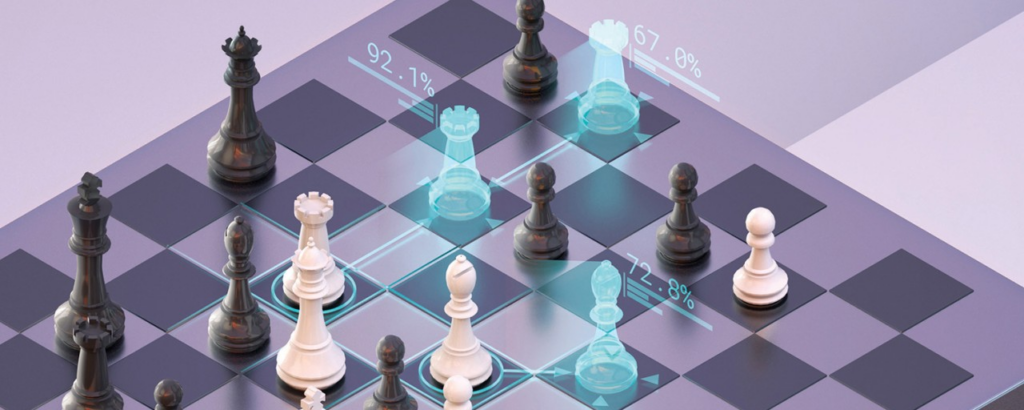
This is the same skill you need when dealing with risk outside the board. Let’s say you’re navigating a contract negotiation. A clause might seem harmless, but if it reminds you of a situation you’ve seen before — even unconsciously — you slow down. You ask more questions. You investigate.
The more chess you play, the more your mind becomes wired to pick up subtle signals, spot unusual shifts, and recognise structure. This helps when you’re reading markets, interpreting behaviour, or making tactical decisions in uncertain spaces like poker or investment deals.
The best decision-makers aren’t just logical — they’re fast pattern readers. Chess builds that naturally.
3. Understanding Risk Is Not the Same as Avoiding It
One of the biggest misconceptions about chess players is that they’re cautious by default. That’s not true. Strong chess players take risks all the time, but those risks are measured.
They understand the cost of losing time, weakening their position, or committing too early. They learn to take action when the odds are justified, not just because the opportunity is there.
This is crucial in real-world high-stakes environments. Whether it’s financial risk, business strategy, or even deciding how to bet in a pressured moment, being able to look at a decision and evaluate not just its upside but its downside is essential.
Chess teaches that every move has a price. Even the best attacks carry weaknesses. That mindset — of constantly weighing risk against reward — prepares you to handle choices that others rush through blindly.
4. Emotional Control: Why It Matters More Than Intelligence
One of the hardest lessons in chess comes when you blunder. You make a strong opening, gain a lead, and then — one careless move — and it’s gone. The natural reaction is panic. You might rush to recover, try something desperate, or lose control entirely.
This is where chess becomes psychological training. You learn to stop that downward spiral. You accept the mistake, assess your new position, and play on. Over time, this becomes second nature.
In high-stakes decisions, the same emotional swings happen. A failed trade, a public slip-up, a bad meeting — they test not your IQ, but your ability to stay present.
The difference between someone who recovers and someone who collapses under pressure isn’t usually talent — it’s emotional discipline. And chess builds that better than most activities.
5. Making Decisions With Incomplete Information
There’s a myth that chess is played with perfect visibility. The truth is more nuanced. In complex positions, there are often 5–10 viable options, each with uncertain consequences. Even grandmasters can’t calculate everything. They must assess based on partial understanding.
That experience of being forced to move without being 100% sure is the same mental terrain you face in high-stakes environments.
Should you back out of a negotiation? Take that investment? Call a bluff? You won’t always have all the data. Chess trains your brain to act with structure and logic, even when full certainty isn’t possible. You learn to work with estimates, instincts, and fallback plans.
It’s not about perfection. It’s about functional decision-making under uncertainty. That’s what real pressure looks like.
6. Using Losses as a Roadmap, Not a Wall
One of the most important — and humbling — parts of chess is the analysis that happens after a loss. You sit with the game. You replay every move. You see where things went wrong and why.
This doesn’t happen automatically in most professions. People fail, and then try to forget. But chess teaches the opposite: review is part of the process.
That shift — from shame to curiosity — is key for anyone operating under pressure. In business, finance, or risk-taking environments, the ability to learn precisely from mistakes (without emotion and without defensiveness) can lead to faster growth than endless success.
Chess gives you a controlled space to fail, reflect, and adjust. That habit transfers directly into high-performance work.
7. Staying Calm When Everything Speeds Up
There’s a moment in nearly every chess game, especially fast formats, when tension hits a peak. Both sides are attacking. Pieces are flying. Every move feels decisive.
This is where most people crumble. But experienced players breathe through it. They know how to slow their brain down even as the clock races.
That’s the mental gear you need in real life, too. In a presentation going sideways. In a job interview that takes an unexpected turn. In a negotiation, when the other side throws in surprise terms. Or in a poker hand where the pot is bigger than planned.
Chess trains the mind to stay calm, not by forcing it, but by getting used to discomfort. The brain learns that clarity is possible even under pressure, and that staying still mentally can be more powerful than rushing.
Final Thoughts: Why Chess Still Matters in a Fast World
Chess is slow. The world is fast. And that’s exactly why it’s so valuable today.
In a world that pushes quick thinking, instant reactions, and short attention, chess gives you time to develop a real decision-making structure. You train your brain to pause, think, project, adapt, recover, and act — all within a controlled environment.
So when the real world throws something sharp at you — a financial blow, a career dilemma, a risky bet, or a fast-paced negotiation — you’ve already seen the pressure before. Not in theory. In practice.
That’s the power of chess. It’s not just about kings, queens, or grandmasters. It’s about building a mind that stays sharp when the pressure is high, and the next move actually matters.